
Tracking Wounded Game: Signs, Blood Patterns, and Real-World Recovery
Every experienced hunter eventually faces one of the most difficult moments in the field: taking a shot, watching an animal disappear into cover, and suddenly realizing the recovery may not be quick or easy. Tracking wounded game is one of the most important skills a hunter can develop because it combines ethics, patience, observation, and discipline. The difference between a successful recovery and a lost animal often comes down to what happens in the first fifteen minutes after the shot.
Many hunters rush into the trail too quickly. Adrenaline takes over, and the desire to put hands on the animal can cloud good judgment. Careful observation at the shot site often provides more useful information than blindly charging into the woods.
The first step is watching the animal after the shot. Did it mule kick? Did it hunch up? Did it run hard with its tail tucked? Did it stumble immediately or continue moving strongly? Every detail matters. Even the direction the animal disappears can help later when blood becomes difficult to follow.
Reading the Shot Site
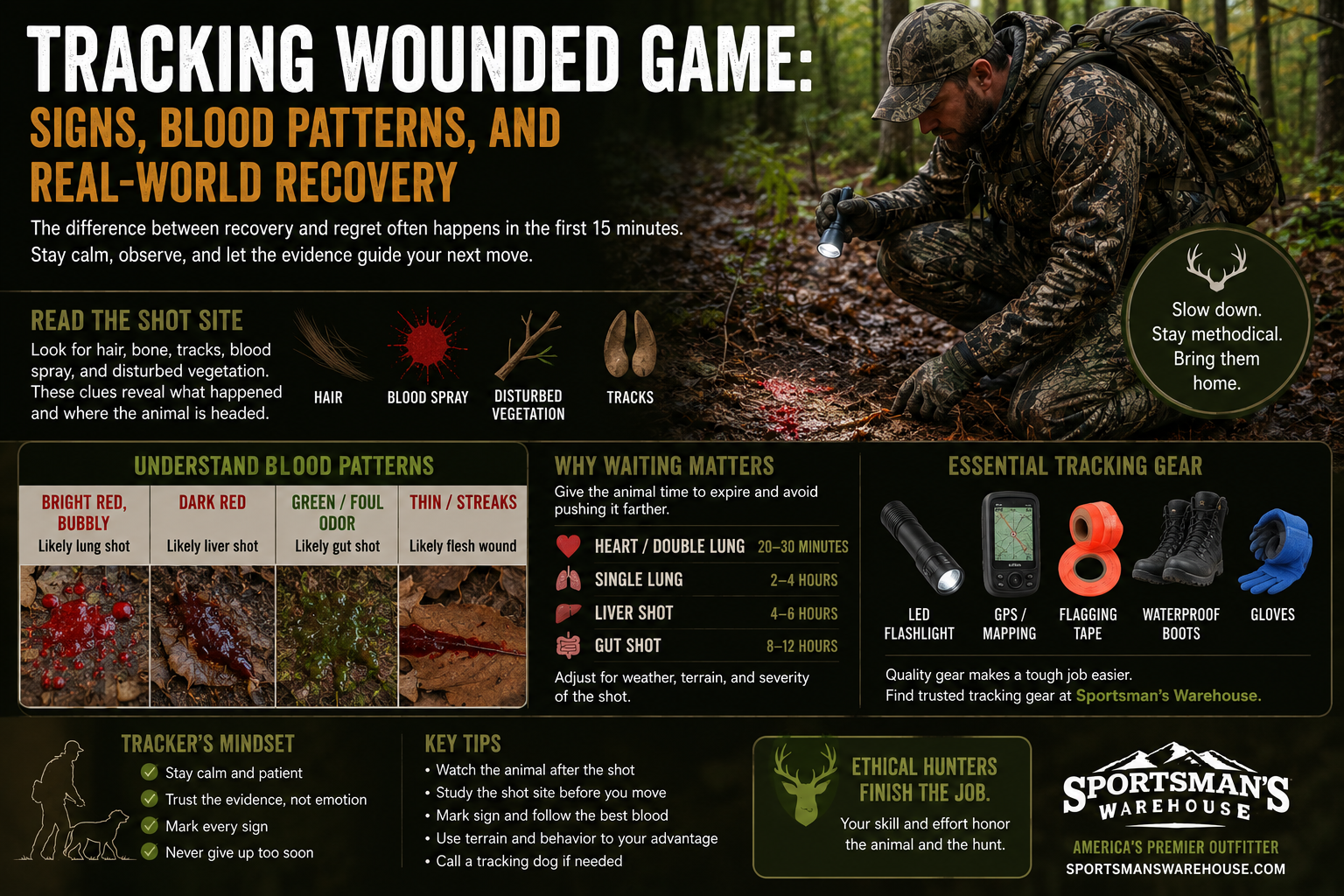
The shot site is your first clue to what happened. Before following the trail, stop and study the area carefully. Look for hair, bone fragments, tracks, blood spray, and disturbed vegetation.
Hair can tell you a surprising amount about shot placement. Long, coarse hair often comes from the back or belly. Fine, short hair usually comes from the side. White hair may indicate a low brisket hit or belly shot. Dark hair with skin attached can suggest a high impact shot with significant penetration.
Tracking your game is easier with gear from Sportsman’s Warehouse
Blood color and consistency are also critical.
- Bright red blood with bubbles often indicates a lung shot.
- Dark red blood can point toward a liver hit.
- Green or foul-smelling material may signal a gut shot.
- Thin streaks of muscle blood may indicate a non-lethal flesh wound.
Hunters who understand blood patterns can make better decisions about how long to wait before beginning the track.
Why Waiting Matters
One of the hardest lessons for impatient hunters is learning when not to track immediately.
A double-lung hit animal may expire within 100 yards, making recovery straightforward after a short wait. But liver-hit or gut-shot animals often bed down within a few hundred yards if left undisturbed. Pushing them too quickly can force them to travel miles.
General waiting guidelines include:
- Heart or double-lung hit: 20–30 minutes
- Single lung: 2–4 hours
- Liver shot: 4–6 hours
- Gut shot: 8–12 hours
The gear you’ll need is found at Sportsman’s Warehouse
Weather conditions can complicate these timelines. Heavy rain, snow, or warm temperatures may force hunters to track sooner. However, rushing blindly usually creates bigger problems.
Understanding Blood Patterns
Blood trails tell stories if you know how to read them.
A strong spray on both sides of the trail often indicates a pass-through shot with excellent blood pressure. Sparse drops that suddenly disappear may suggest clotting or a high hit that does not bleed heavily externally.
Beds containing blood are particularly important. A bed with large pools of blood often indicates the animal is weakening. If the blood trail continues strongly beyond multiple beds, the animal may still be traveling farther than expected.
Pay attention to direction changes. Wounded deer frequently angle downhill, seek water, or move toward thick cover. Elk may head toward dark timber or creek bottoms. Understanding natural behavior improves tracking success.
Mark Every Sign
Experienced trackers frequently mark blood with biodegradable tissue, flagging tape, or GPS waypoints. This helps reveal travel direction and allows hunters to relocate the trail if it disappears.
Modern GPS apps and hunting mapping tools can be incredibly useful during recovery efforts. Dropping pins at blood locations creates a visual line of travel that often exposes likely bedding areas.
At night, quality flashlights become essential. Many hunters now carry high-powered LED lights specifically designed for blood tracking. White light often works best, though some hunters prefer blue or green filters under certain conditions.
Recovering Game in Thick Terrain
Tracking becomes significantly harder in swamps, mountain timber, thick briars, and tall grass. In these situations, slow movement is critical.
Rather than staring directly at the ground, skilled trackers frequently look ahead for overturned leaves, broken branches, kicked dirt, or unusual movement patterns. Wounded animals leave more than blood behind.
In wet terrain, tracks themselves may become more useful than blood. Mud impressions, dew disturbance, and bent grass can continue the trail even when blood disappears.
If the trail is lost completely, return to the last confirmed blood and begin slow circular searches outward. Many recoveries happen because hunters refused to panic and instead returned methodically to the last known point.
Using Dogs for Recovery
In many states, trained tracking dogs are becoming increasingly popular for wounded game recovery. These dogs can follow microscopic scent particles that humans cannot detect.
Hunters should know local regulations before using tracking dogs because laws vary by state. In legal areas, contacting a professional tracker early can greatly improve recovery odds.
A skilled tracking dog can often recover animals that would otherwise be lost entirely.
Emotional Discipline During Recovery
Tracking wounded game tests patience more than shooting skill.
Excitement, frustration, self-doubt, and pressure can all cloud judgment. Hunters sometimes convince themselves the shot was perfect when evidence suggests otherwise. Others become discouraged too quickly and abandon recoveries prematurely.
Successful trackers remain calm and analytical. They trust evidence instead of emotion.
One of the most important habits is slowing down after losing blood. Fast movement causes hunters to walk past tiny drops, subtle tracks, or critical sign.
Ethical Responsibility in Hunting
Recovering wounded game is not optional. Ethical hunters owe every animal a full recovery effort.
Even highly experienced hunters occasionally make poor shots due to brush deflection, animal movement, wind, or adrenaline. What defines responsible sportsmen is their willingness to commit time and effort to recovery.
Some recoveries last several hours. Others continue into the next morning. Hunters who stay persistent usually recover more animals than those who quit early.
Gear That Helps During Recovery
Several pieces of gear can improve tracking success:
- High-quality flashlight or headlamp
- GPS or mapping app
- Flagging tape or biodegradable tissue
- Sharp knife
- Extra batteries
- Latex gloves
- Binoculars for scanning ahead
- Spare marking pins or reflective tacks
Reliable boots also matter during long tracking jobs. Waterproof options from brands like Rocky Boots or Muck Boots are especially useful in wet or cold terrain.
Final Thoughts
Tracking wounded game is one of hunting’s most humbling experiences. It reminds hunters that success does not end with the shot. Observation, patience, ethics, and persistence are equally important.
The hunters who recover the most animals are usually not the fastest trackers. They are the calmest. They study the evidence carefully, move slowly, and trust the process.
Every blood trail teaches something new. Over time, hunters begin recognizing patterns, understanding animal behavior, and developing instincts that only experience can build.
When approached responsibly, tracking wounded game becomes more than recovery. It becomes one of the deepest expressions of respect a hunter can show for the animals they pursue.