
Big Bass in Little Water: How to Find Fish in Ponds, Creeks, and Farm Lakes
There is always a moment outdoors when the day gets honest. It may be a deer track pressed into wet clay, a gobbler that answers once and then shuts up, a bass that rolls under a shaded limb, or a child asking whether there are more crackers in the truck. That moment is where skill begins. Not in a catalog. Not in camp talk. In the small decision you make next.
This guide is written for everyday hunters and anglers who want practical field use, not fancy theory. You will find clear sections, mistakes to avoid, gear that fits naturally, and simple takeaways you can use the next time you step into the woods or walk down to the water.
Useful gear for this topic
A bank-friendly combo from KastKing, smooth spinning gear from Piscifun, and a compact tackle bag from FishVault are plenty for most small-water bass trips.
Read the Bank Before You Cast
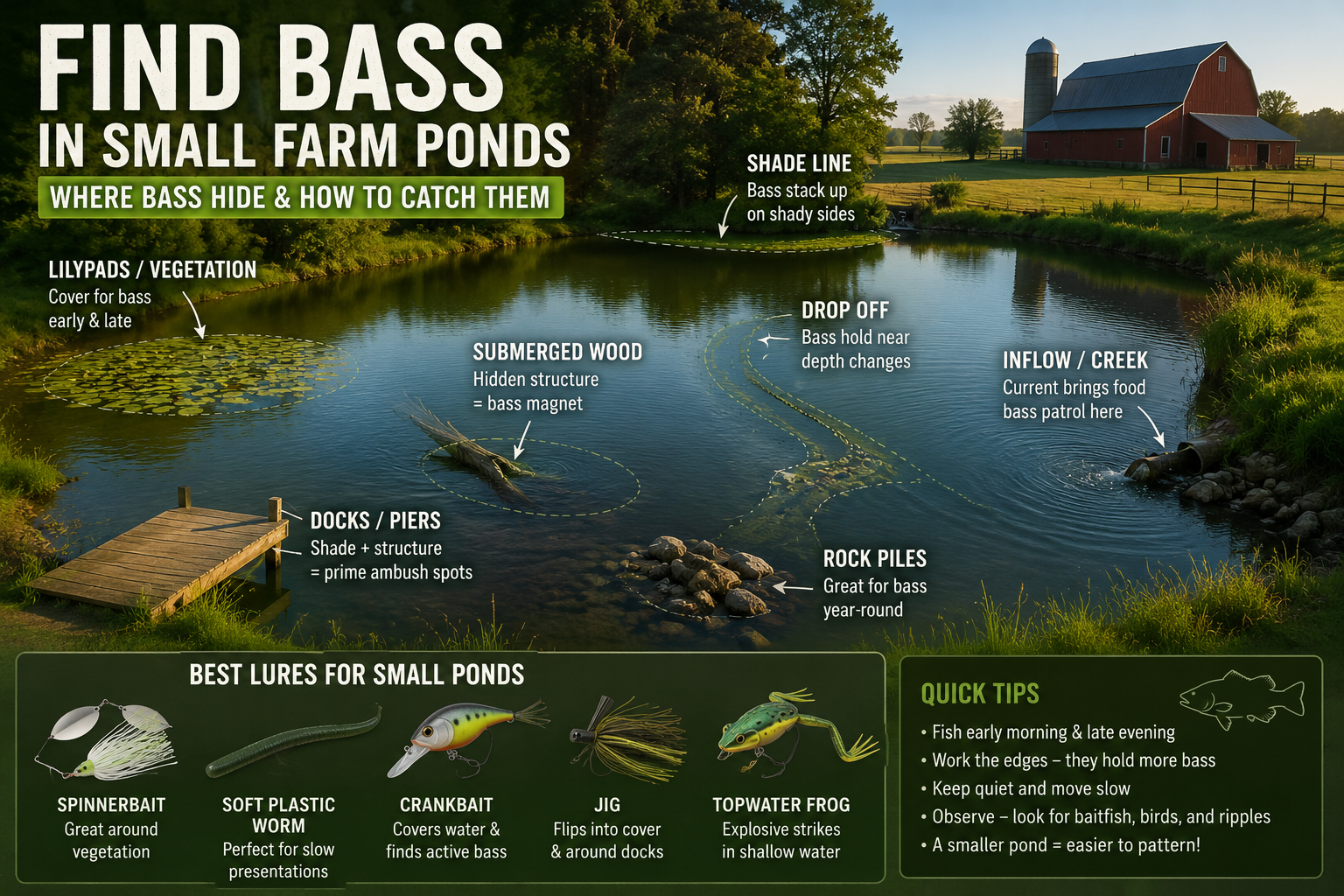
Most pond anglers walk up and throw straight to the middle. Slow down. Look for bluegill beds, nervous minnows, shade lines, muskrat holes, grass points, culverts, laydowns, and muddy water from feeding fish. Bass in small water use edges. Your first casts should be quiet and close, often parallel to the bank. The fish you spook at your feet may be the biggest one in the pond.
Field-use takeaway: Put this into practice on your next trip by choosing one sign, one route, and one decision point before you ever sit down. The outdoors gets simpler when you stop guessing and start comparing what you see against what the wind, water, cover, or animal behavior is already telling you.
Shade Is Structure
On farm lakes and ponds, shade can be as important as depth. A single willow, dock, brush pile, cattle crossing, or undercut bank can hold fish all summer. In clear water, shade gives bass ambush cover. In muddy water, shade plus hard cover is a target. Cast past the shade, bring the lure through it, and pause where a bass should be waiting.
Field-use takeaway: Put this into practice on your next trip by choosing one sign, one route, and one decision point before you ever sit down. The outdoors gets simpler when you stop guessing and start comparing what you see against what the wind, water, cover, or animal behavior is already telling you.
Story box: the quiet clue
One of the best lessons comes when nothing dramatic happens. A track at the same crossing, a gobble that stops at the same fence, a bass that keeps showing under one shade line, or a kid who smiles at the snack break all point to the same truth: little clues build the trip. Pay attention before you push harder.
Creeks Are About Current and Holes
Creek bass relate to current seams, deeper bends, root wads, bridge pilings, and small eddies behind rocks. Do not overlook ankle-deep riffles above a pool. Bait washes down and bass face upstream. A small lure drifting naturally can outfish a loud presentation. Move slowly, stay low, and cast upstream or across current so the bait behaves like food instead of hardware.
Field-use takeaway: Put this into practice on your next trip by choosing one sign, one route, and one decision point before you ever sit down. The outdoors gets simpler when you stop guessing and start comparing what you see against what the wind, water, cover, or animal behavior is already telling you.
Farm Lakes Have Personalities
One farm pond may be a bluegill factory. Another may grow skinny bass because there are too many mouths. Another may have a few giants that eat frogs in grass. Learn each water by taking notes. Is the dam deeper? Are there springs? Does runoff muddy one end? Are cows stirring the edge? Did the owner stock shad, catfish, or grass carp? Small water rewards observation more than expensive tackle.
Field-use takeaway: Put this into practice on your next trip by choosing one sign, one route, and one decision point before you ever sit down. The outdoors gets simpler when you stop guessing and start comparing what you see against what the wind, water, cover, or animal behavior is already telling you.
Visual field note
Suggested image: Angler fishing for bass along a small farm pond. Add a simple overlay or caption showing the key decision: wind direction, travel route, cast angle, setup position, recovery sign, or kid-friendly comfort zone.
Keep the Lure Menu Simple
You can cover most small-water bass with a soft plastic worm, small jig, spinnerbait, topwater, and a shallow crankbait. Match the mood. Use subtle baits in clear, calm water. Use vibration when water is stained or wind-rippled. Downsize when fish are pressured. Upsize around big bluegill or frogs. The goal is not to show every lure you own; it is to make the next cast smarter.
Field-use takeaway: Put this into practice on your next trip by choosing one sign, one route, and one decision point before you ever sit down. The outdoors gets simpler when you stop guessing and start comparing what you see against what the wind, water, cover, or animal behavior is already telling you.
The most useful habit is to slow the whole process down. Before you change spots, change lures, call again, climb down, or make the next decision, ask what the last clue actually proved. That one pause keeps a hunter from walking through bedding cover, keeps an angler from leaving active fish, and keeps a family trip from turning into a forced march. Outdoor skill is rarely one big secret. It is a string of small, correct choices made while everybody else is rushing.
Common mistakes that cost people success
- Casting over fish before fishing the near bank.
- Using giant lake tactics on a pond you could walk around in ten minutes.
- Ignoring tiny inflows after rain.
- Making too much noise on small banks where vibrations travel fast.
Keep the lesson simple enough to repeat. One clear note in a pocket notebook, one photo of the sign, one marked waypoint, or one sentence spoken to a kid on the ride home will do more good than a complicated plan you never use again. The next trip should begin with something the last trip taught you.
Practical takeaways
- Make one clear plan before the trip starts.
- Let real sign override assumptions from last season.
- Use gear to solve field problems, not to complicate the day.
- Keep notes so each trip teaches the next one.
That is the kind of simple field rhythm that turns beginners into steady outdoorsmen.
End with a challenge
Fish one small pond with only three lures and write down exactly where every bite happens. Do it before you read another article, buy another piece of gear, or blame the weather. The outdoors rewards the person who turns one good lesson into a habit.
Use it once, refine it once, and then make it part of how you prepare.
About the author
Earnest Sherrill writes for Hunting and Fishing Life with a practical, story-first approach to hunting, fishing, gear, cooking, and family time outdoors.