
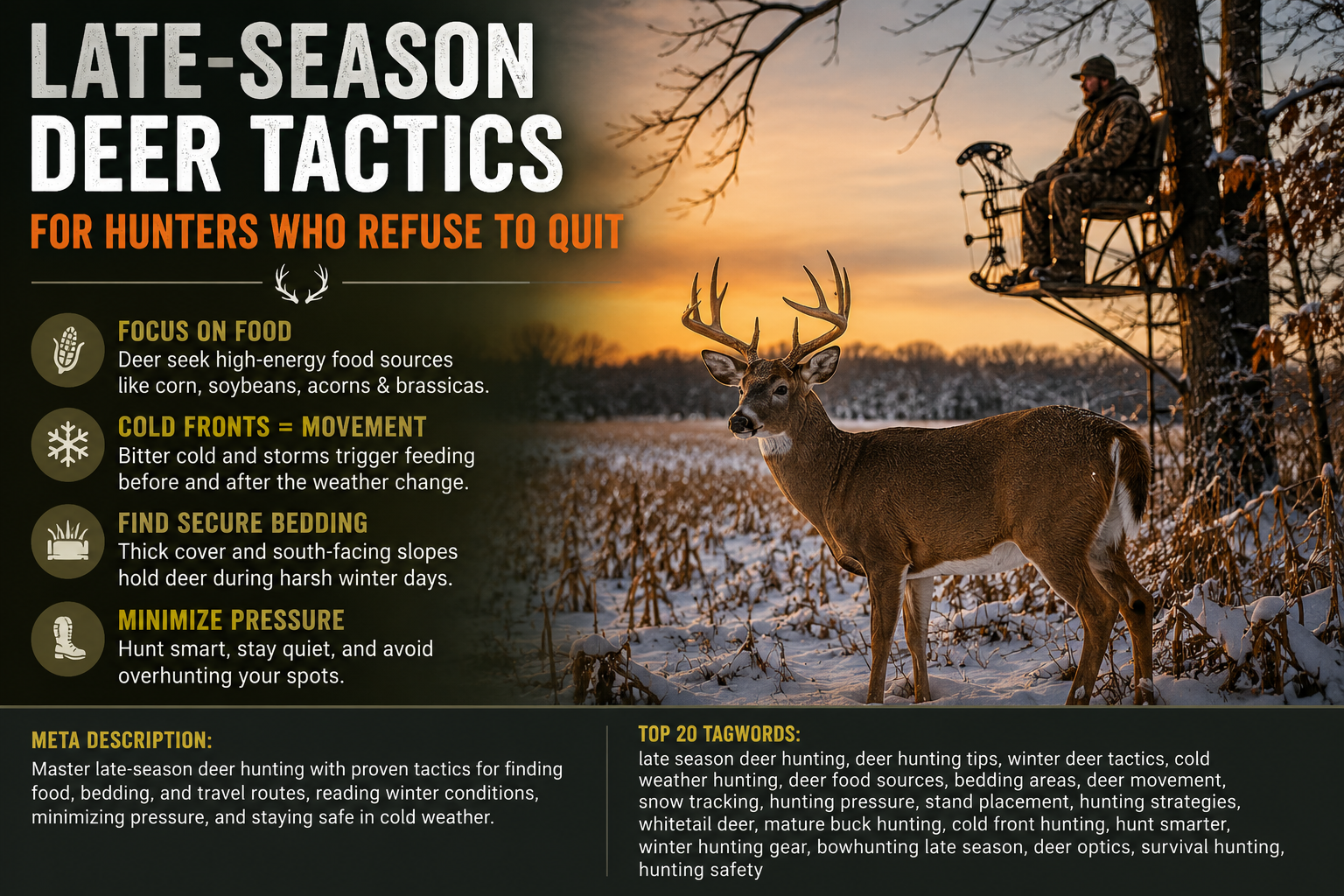
Late-Season Deer Tactics for Hunters Who Refuse to Quit
Late-season deer hunting separates serious hunters from casual ones.
By the time winter arrives, deer have survived months of hunting pressure, changing weather patterns, and increased human activity.
Food sources have shifted, movement patterns tighten, and mature bucks become extremely cautious.
Yet late season can also produce some of the best opportunities of the year.
Hunters willing to adapt often discover predictable deer behavior that others overlook.
Why Late Season Is Different
During late season, deer priorities change dramatically.
The rut is mostly over.
Now survival becomes the focus.
Cold weather forces deer to concentrate around:
- High-energy food sources
- Thermal cover
- Security bedding
Whitetails burn enormous calories during winter.
Mature bucks especially need to recover body weight lost during the rut.
That creates opportunities for hunters who understand where deer must feed.
Focus on Food Sources
Food is king during late season.
Deer seek easy calories.
The best late-season food sources often include:
- Standing soybeans
- Cornfields
- Brassica food plots
- Acorns
- Winter wheat
- Browse near bedding cover
If legal in your area, supplemental feeding sites may also attract deer consistently.
The key is identifying the most dependable remaining food source in the area.
Hunt Evenings Carefully
Late-season evening hunts are often highly productive.
Cold temperatures encourage deer to feed earlier.
However, mature bucks may still stage inside cover before entering open areas.
Position stands between bedding and feeding whenever possible.
Avoid sitting directly on food sources unless conditions strongly favor it.
Bedding Cover Becomes Critical
As pressure increases, deer spend more time in secure cover.
Look for:
- Thick cedars
- South-facing hillsides
- Swamps
- Brush piles
- CRP grass
- Dense creek bottoms
South-facing slopes often hold deer because they receive more sunlight and provide warmer bedding during cold weather.
Cold Fronts Trigger Movement
Temperature drops frequently increase late-season activity.
Bitter cold often forces deer to feed aggressively before and after storms.
Hunters who brave difficult conditions are often rewarded.
Some of the best late-season hunts happen during:
- Snowstorms
- Arctic cold fronts
- High-pressure bluebird days after storms
Deer movement becomes more predictable when survival pressure increases.
Minimize Hunting Pressure
Late-season deer are extremely sensitive to disturbance.
One careless hunt can push mature bucks entirely nocturnal.
Use low-impact strategies:
- Limit unnecessary scouting
- Avoid overhunting stands
- Hunt only favorable winds
- Enter quietly
- Leave without spooking deer
Sometimes less pressure creates better opportunities.
Snow Changes Everything
Snow reveals valuable information.
Tracks show:
- Feeding patterns
- Travel routes
- Bedding areas
- Buck size clues
- Recent movement
Fresh snow can help hunters identify active late-season hotspots quickly.
Snow also allows quieter movement under certain conditions, though crunchy frozen snow can create problems.
Use Optics More
Late-season deer often feed in open areas during the final minutes of daylight.
Good binoculars help hunters glass distant movement without unnecessary intrusion.
Observation from roads or distant vantage points can help locate feeding patterns before committing to a stand location.
Adjust Stand Locations
Early-season stands may no longer produce.
Late-season deer often alter movement due to:
- Hunting pressure
- Food changes
- Weather
- Reduced daylight
Do not be afraid to move.
Fresh sign should guide late-season decisions.
Midday Movement Can Increase
Extremely cold weather occasionally increases midday feeding activity.
Deer may feed multiple times daily when temperatures plummet.
Hunters who stay longer sometimes catch movement others miss.
Late-Season Bowhunting Opportunities
Bowhunters often enjoy unique advantages late in the season because fewer hunters remain in the woods.
Reduced pressure can create calmer deer movement patterns.
Food-source ambushes become especially effective.
Late-season deer also tend to follow more predictable routines than during the chaos of the rut.
Mental Toughness Matters
Late-season hunting requires discipline.
Cold weather, long sits, and reduced deer sightings discourage many hunters.
The hunters who remain persistent often encounter mature deer after others quit.
Success frequently comes down to:
- Patience
- Weather timing
- Strategic pressure management
- Endurance
Safety During Cold Weather
Winter hunting creates additional safety concerns.
Always prepare for:
- Hypothermia
- Frostbite
- Snow-covered terrain
- Ice hazards
- Rapid weather changes
Carry:
- Extra gloves
- Hand warmers
- Emergency supplies
- Dry clothing layers
Staying comfortable helps hunters remain focused longer.
Final Thoughts
Late-season deer hunting rewards hunters who adapt.
The woods may seem quieter, but deer still follow survival patterns that smart hunters can exploit.
By focusing on:
- Food
- Bedding cover
- Cold fronts
- Low pressure
- Smart access
hunters can create excellent late-season opportunities using a Huntvault subscription.
Some of the biggest bucks of the year are harvested after most hunters have already packed up their gear.
The hunters using Huntvault refuse to quit and often discover that winter woods still hold incredible potential.