
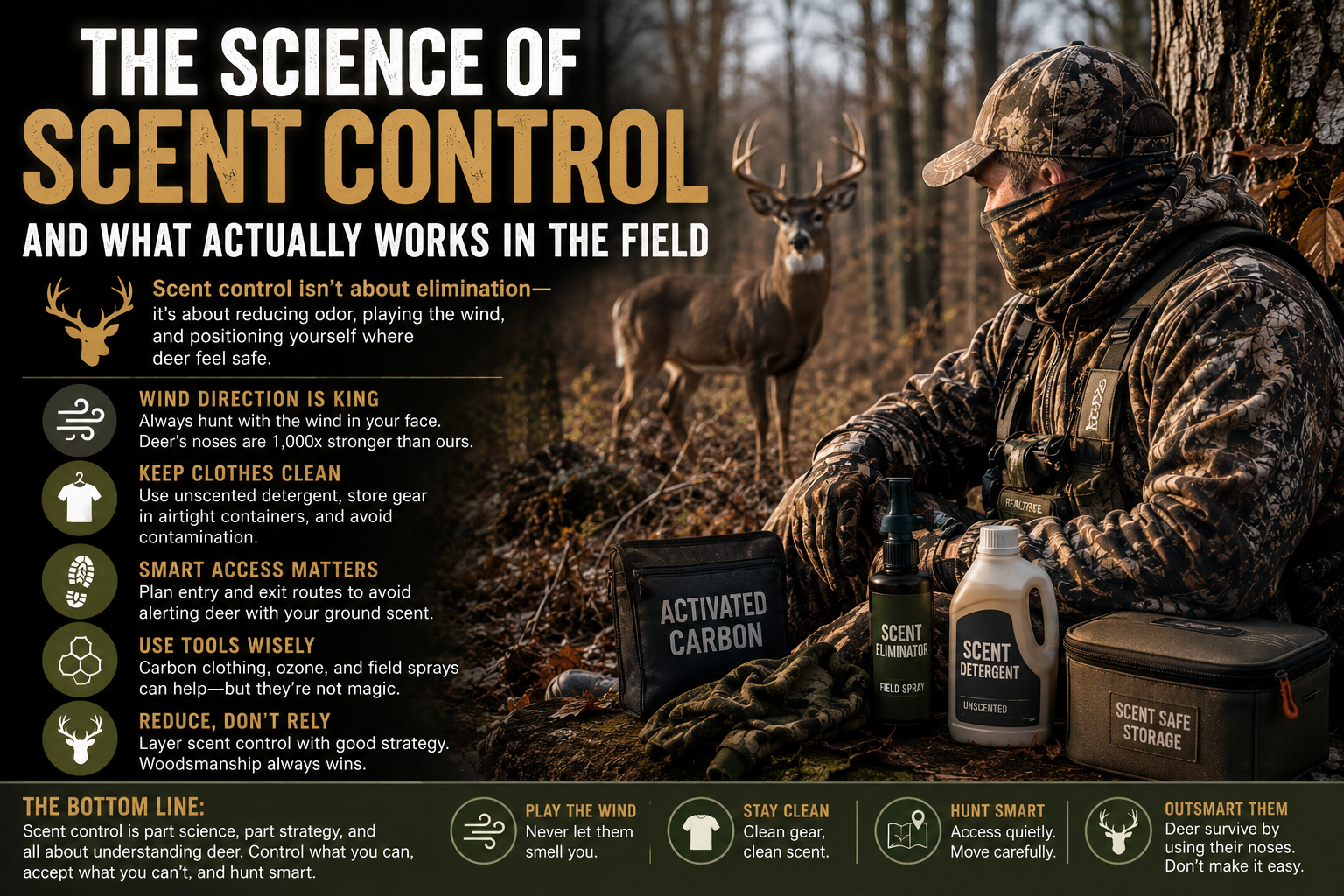
The Science of Scent Control and What Actually Works in the Field
The Science of Scent Control and What Actually Works in the Field
Scent control is one of the most debated topics in deer hunting.
Some hunters believe scent elimination products are essential. Others argue that wind direction is the only thing that truly matters.
The reality lies somewhere in the middle.
Whitetail deer possess an incredible sense of smell. Researchers estimate deer have hundreds of millions of scent receptors, vastly outperforming humans.
That means hunters should absolutely take scent seriously.
However, understanding how scent actually works in the field matters far more than blindly buying every product on the shelf.
Why Deer Smell Hunters So Easily
Humans constantly produce odor.
We release scent through:
- Sweat
- Breath
- Skin bacteria
- Clothing contamination
- Boots and gear
Even after showering, human scent begins rebuilding almost immediately.
Deer identify danger by detecting unfamiliar odors in their environment.
A mature buck that smells a hunter repeatedly becomes increasingly cautious.
The Biggest Myth in Scent Control
Complete scent elimination is impossible.
No product can make a hunter truly invisible to a deer’s nose.
This is important because unrealistic expectations cause frustration.
The goal of scent control should be reducing odor enough to buy extra seconds or prevent immediate alarm.
Sometimes that small advantage is all a hunter needs.
Gear option:
Sportsman’s Warehouse carries scent-free detergents, storage bags, and field sprays used by serious hunters.
Wind Direction Is Still King
No scent product matters if your wind blows directly into deer.
Experienced hunters constantly monitor wind because deer trust their noses more than their eyes.
The smartest approach combines:
- Wind management
- Low-impact access
- Reasonable scent reduction
- Smart stand placement
Hunters who ignore wind often educate deer regardless of what spray they use.
Clothing Management Matters
One practical aspect of scent control that truly helps is limiting contamination.
For example:
- Avoid wearing hunting clothes into gas stations
- Keep clothing away from pets and food odors
- Store gear in scent-free containers
- Wash clothing with unscented detergent
Human environments create powerful foreign odors.
Reducing those odors can make hunters less detectable.
Where to shop:
OpticsPlanet offers a wide range of scent-control hunting apparel and systems.
Rubber Boots Help More Than Many Realize
Ground scent matters.
Deer frequently cross hunter entry trails.
Rubber boots help reduce scent transfer better than many fabric materials.
They also prevent moisture absorption, which can carry additional odor.
While not magical, rubber boots are one of the more practical scent-reduction tools available.
Activated Carbon and Ozone Products
Activated carbon clothing became extremely popular because carbon can absorb certain odor molecules.
Does it work?
To some degree, yes.
However, effectiveness varies based on:
- Humidity
- Airflow
- Contamination levels
- Clothing maintenance
Ozone generators are another controversial tool.
Ozone can neutralize odors under specific conditions, but hunters often overestimate its capabilities.
Improper ozone use may also expose deer to unnatural smells.
These tools may help marginally, but they are not replacements for proper hunting strategy.
Showering and Personal Hygiene
Showering with scent-free soap before hunting can reduce odor temporarily.
Breath control also matters more than many hunters realize.
Coffee, tobacco, food odors, and scented products can spread easily.
Simple habits help:
- Use unscented soap
- Avoid cologne
- Wash clothes properly
- Keep gear clean
Again, the goal is scent reduction, not elimination.
Thermals and Air Currents
Many hunters understand wind but ignore thermals.
Thermals are vertical air movements caused by temperature changes.
In hilly terrain:
- Cool evening air sinks downhill
- Morning warming air rises uphill
Hunters who ignore thermals may unknowingly send scent directly into bedding areas.
This is especially important in mountain or bluff-country terrain.
Moisture Increases Scent Spread
Humidity often intensifies scent detection.
Moist conditions hold scent molecules more effectively than dry air.
Rainy or damp conditions may allow deer to smell hunters more easily at times.
However, wet conditions can also help mask movement noise.
Understanding these tradeoffs helps hunters adapt.
Entry Routes Matter More Than Sprays
One careless entry route can contaminate an entire hunting area.
If you walk through feeding areas or major trails, deer may detect your ground scent hours later.
Careful access planning often matters more than expensive scent products.
Good hunters think constantly about:
- Where scent travels
- How deer approach
- How to avoid contamination
What Actually Works Best
The most effective scent-control system is layered.
Successful hunters combine:
- Playing the wind
- Clean clothing
- Minimal disturbance
- Smart access routes
- Careful stand selection
- Limited pressure
No single product replaces woodsmanship.
Mature Bucks Are Different
Older bucks react differently to human scent than young deer.
Young bucks sometimes tolerate weak scent traces.
Mature bucks rarely do.
That is why scent management becomes increasingly important when targeting older deer.
Realistic Expectations
Hunters often expect scent products to guarantee close encounters.
That is unrealistic.
The woods constantly swirl scent unpredictably.
Instead, think of scent reduction as increasing your odds slightly.
Small percentage advantages add up over time.
Final Thoughts
The science of scent control is less about magic products and more about understanding deer behavior.
Whitetails survive because they trust their noses.
Hunters who consistently succeed usually:
- Respect wind direction
- Limit pressure
- Control contamination
- Hunt intelligently
- Understand terrain and thermals
Scent-control products can help at the margins, but strategy always matters most.
The best hunters are not invisible to deer.
They simply avoid giving deer a reason to become alarmed before an opportunity happens.
Author Bio
Earnest Sherrill is an outdoor writer, lifelong hunter, and field-tested gear researcher with a deep appreciation for the science and tradition behind hunting and fishing. With decades of hands-on experience in whitetail woods, backcountry camps, and real-world field conditions, Earnest focuses on separating proven tactics from marketing hype.
His writing emphasizes practical knowledge, ethical hunting practices, and evidence-based strategies that help hunters make smarter decisions in the field. From scent control and gear selection to behavior-driven hunting tactics, his work is grounded in what actually works when it matters most.
As the founder of multiple outdoor and publishing platforms, Earnest combines disciplined research with real-world experience to deliver content that is both informative and actionable. When he’s not writing, he’s scouting new ground, refining his setups, or testing equipment under real hunting conditions.